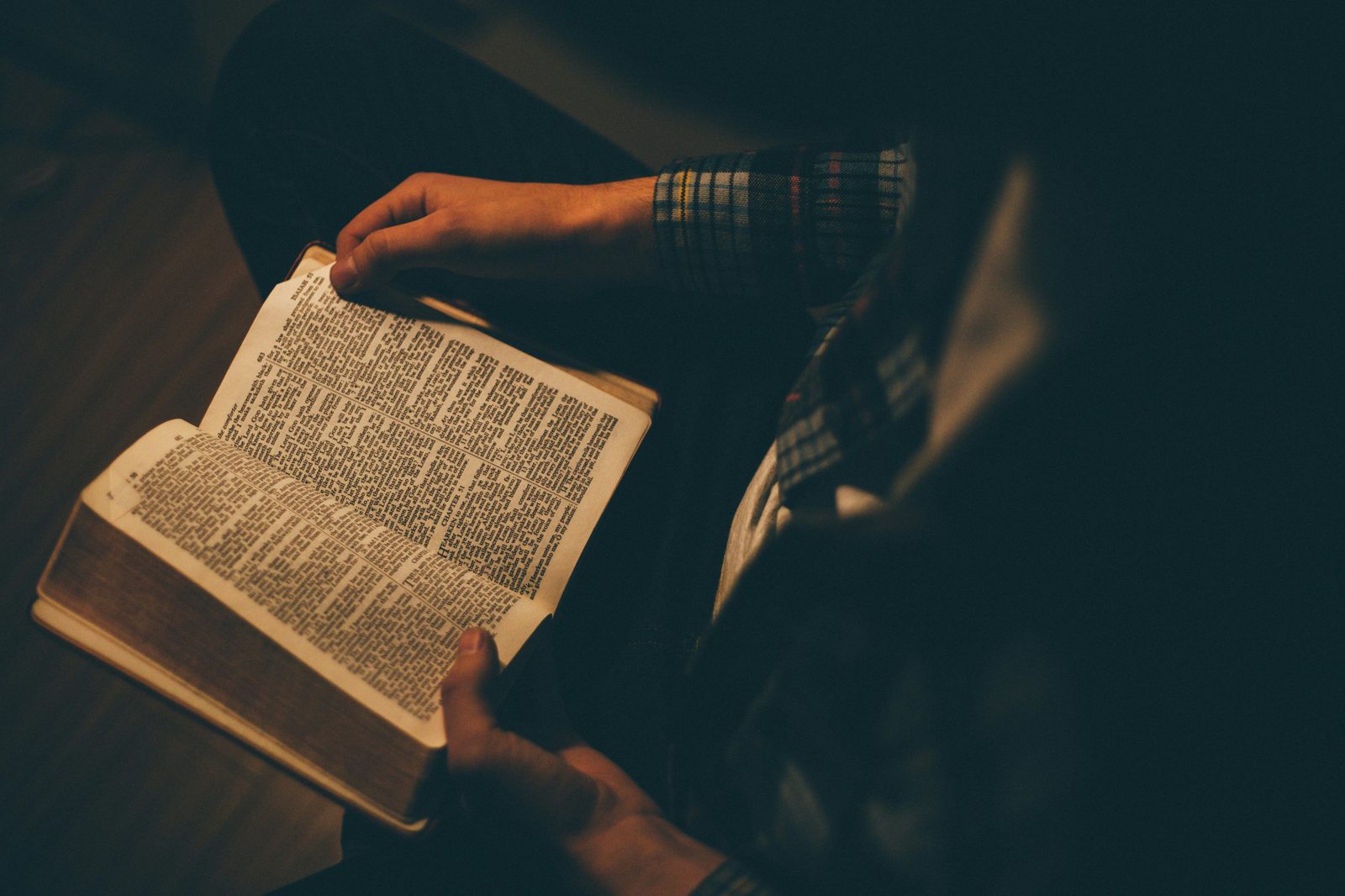
Most people searching how to build a prayer habit already know how to pray. What they don't have is a system that survives a bad week. You can want to pray every day and still miss six days out of seven, not because your faith is weak, but because you never built the habit around anything sturdier than good intentions.
The usual pattern looks like this: you download an app, pray hard for nine days straight, miss a Tuesday, feel guilty about it for a week, and quietly stop opening the app altogether. That spiral is ordinary. Habits built on motivation alone almost always end this way, regardless of how much you meant it on day one.
This assumes the basics are already in place. If you're still working out what prayer actually is, start there first.
Start with your why, not your goal
"I want to pray more" isn't a why. It's a wish. A why sounds more like: I want five minutes where nobody needs anything from me. I want to stop carrying the day alone. I want my kids to see me do this before they leave for school. I want to stop feeling like a fraud every time someone asks if I still believe. Write yours down in one sentence, the real one, not the one that sounds spiritual enough for a testimony.
James Clear, who wrote the modern bible on habit formation, puts it this way:
"Every action you take is a vote for the type of person you wish to become."
James Clear, Atomic Habits
That's the shift that makes a prayer habit outlast week two. Praying more is the side effect. Becoming someone who prays is the actual project. Every morning you show up, tired or not, is a vote for that identity. Enough votes and it stops being a decision.
The Psalms describe the same idea in older language, written about a king but true of anyone who keeps the practice up:
"Prayer also shall be made for him continually; and daily shall he be praised."
Psalm 72:15
Continually and daily are habit words. Nobody in scripture prayed their way into consistency through a single dramatic encounter. They just kept showing up, the same way you're about to.
The health case, if you need one
You don't need a medical reason to talk to God, but the research happens to back it up. Of 63 studies looking at religious practice and blood pressure, 57 percent found that people who prayed regularly had measurably lower blood pressure than those who didn't. Brain imaging on people in prayer shows increased activity in the prefrontal cortex, the part that handles focus and calm reasoning, and reduced activity in the amygdala, the part that fires during fear and anxiety. Researchers call the physical result the relaxation response: slower breathing, a lower heart rate, reduced oxygen demand, less cortisol in your blood. You don't need incense or a monastery for any of that. Showing up is the mechanism. For the fuller research picture, see a separate piece on the psychology of prayer.
Build the system, not the willpower
Here's the sentence that should hang over every plan you make:
"You do not rise to the level of your goals. You fall to the level of your systems."
James Clear, Atomic Habits
Wanting to pray daily is a goal. A system is the alarm at 6:45, the app open on your home screen, the chair by the window that's for nothing else, the same five minutes blocked before anyone else in the house is awake. Clear's four questions work as well for prayer as they do for pushups.
How do you make it obvious? Put a reminder at a time you already reliably wake up, not an aspirational hour you'll sleep through.
How do you make it attractive? Pair it with something you already enjoy, like the first cup of coffee or the five minutes before the house gets loud.
How do you make it easy? Start at ninety seconds. Not fifteen minutes. Ninety seconds, said out loud, every day, beats twenty minutes you do twice a month.
How do you make it satisfying? Track it. A streak, a checkmark, a line in a notebook, a box you get to cross off. Something you can watch add up.
Jesus said it plainer than any habit book has managed since:
"The spirit indeed is willing, but the flesh is weak."
Jesus Christ, Matthew 26:41
Jesus wasn't scolding anyone in that verse. He was naming a design constraint every habit has to work around. Don't build a habit that depends on the spirit winning every morning. Build one the flesh can manage on its worst day too.
Don't miss twice
You will skip a day. Everyone does. Clear's research on habit failure found the damage isn't in the miss. It's in what happens after: missing once is an accident, missing twice is the start of a new habit, and this time the new habit is the absence.
Set a rule now, before you need it: never miss two days in a row. Slept through this morning's prayer? Fine. Tonight isn't optional.
This is exactly the gap a reminder and a streak count are built to close. Prayer Stone is a daily Christian prayer app for iOS that lets you set a reminder for whatever time you actually need it and tracks your streak on a month heatmap, so a missed day shows up as a visible gap instead of a vague feeling that you're falling behind. It won't build the habit for you. It just makes the habit harder to lose track of.
Give it longer than you think
Teresa of Ávila spent her life writing about prayer as a practice rather than a mood, and she had blunt advice for beginners tempted to quit early:
"Those who have already begun to pray have understood how important it is not to remain on the first steps."
Teresa of Ávila
The first two weeks of any prayer habit feel mechanical. That's normal, not a warning sign. James Clear has a line about exactly this stretch:
"All the action happens at thirty-two degrees. Complaining about not achieving success despite working hard is like complaining about an ice cube not melting when you heated it from twenty-five to thirty-one degrees."
James Clear, Atomic Habits
Nothing about your prayer habit looks different at day nine than it did at day two. The work accumulates somewhere you can't see it yet, and the difference shows up later than you'd like. Push through the flat stretch and the habit starts running itself, the same way it does for people who've been at this for decades.
FAQ
How long does it take to build a prayer habit?+
Give it a minimum of three weeks of daily repetition before judging whether it's working. Most people feel the habit take hold somewhere between two and six weeks, depending on how consistent the trigger is.
What if I miss a day?+
Don't try to make up for it with a longer prayer the next day. Pray on schedule and treat the miss as a single skipped rep, not evidence you failed.
Does prayer actually reduce stress, or is that just belief?+
Both. Believers report the benefit, and it shows up physically too. Research on prayer links it to lower blood pressure and a measurable drop in stress hormones, similar to findings in relaxation and meditation research.
What's the easiest way to start a daily prayer habit?+
Attach ninety seconds of prayer to something you already do every day, like the first sip of coffee. Consistency at a small size beats intensity you can't sustain.
Prayer Stone builds the system for you — a reminder at the time you set, and a streak on a month heatmap so a missed day never hides.
Try Prayer Stone